
Les principales raisons de Lyn Gardner's de voir The Oresteia au Bridge Theatre
Published on 4 June 2026
Reasons to see The Oresteia at the Bridge Theatre
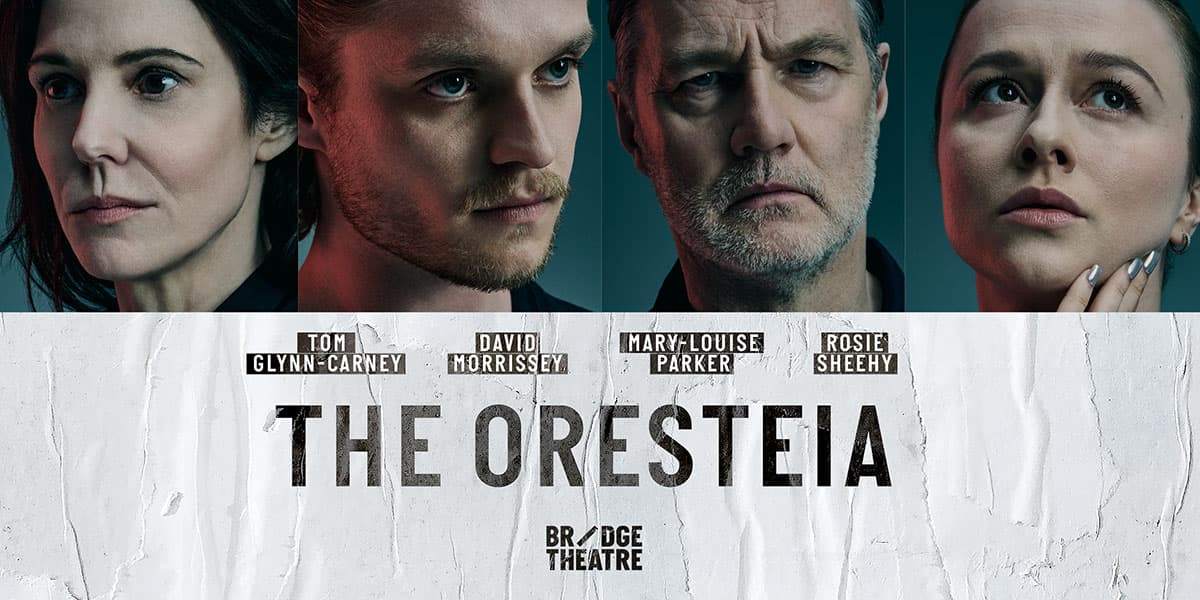
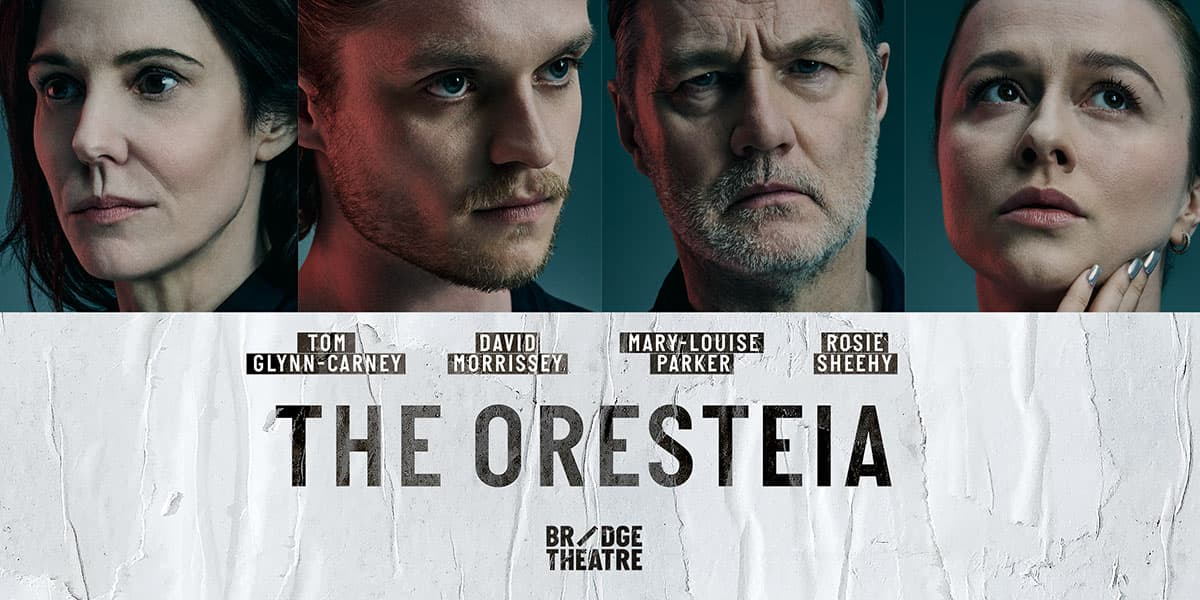
Yes, I know you are disappointed that Chris Pine won’t be on the London stage until 2027 in Ivanov at the Bridge Theatre, but the postponement offers the opportunity for rising levels of anticipation (like looking forward to a holiday booked months in advance) and could just make way for the show of the year. To fill the slot, writer/director Simon Stone is instead turning his attention to that big daddy of revenge tragedies, Aeschylus’ [*The Oresteia*](http://Lyn Gardner's Top Reasons to see The Oresteia at the Bridge Theatre), first performed in 458 BC. Your added bonus is that it stars David Morrissey, Mary-Louise Parker, Tom Glynn-Carney and Rosie Sheehy.
Won’t it be a bit old and crumbly?
Well, yes, it is extremely old and the only complete trilogy of plays to survive from Ancient Greece, but it’s also an award-winner. It won first prize at the city of Athens festival of Dionysia. So, it was the Olivier Award winner of its day. Apparently, there was a team of judges, but they were strongly influenced by how hard the audience clapped; clearly, an early version of the clapometer was in operation for the judging process.
So, what’s it about?
Revenge and justice. In the first play, Agamemnon returns triumphant from the Trojan Wars but is murdered by his wife Clytemnestra, who, not surprisingly, hasn’t got over the fact he sacrificed their daughter Iphigenia to appease the gods and get a fair wind to set sail to Troy. In the second play, the husband and wife’s son, Orestes, murders his mum to avenge his dad’s murder. In the third play Orestes is pursued by the Furies demanding that Clytemnestra is avenged. So it’s three plays condensed into one, asking, 'Can the cycle of revenge and generational trauma ever be broken?'
Ok, I like a bit of revenge, but it still feels as if it will be all Greek to me.
It might well do so if it were not for the fact that it is being rewritten and directed by Simon Stone, who has a real knack for bringing old and older texts right up to date. He had a huge hit with a knock-out version of Lorca’s Yerma set in contemporary London with Billie Piper in the lead, and he did a brilliant Medea set in contemporary America. So, this version is about a family in the here and now, not one living thousands of years ago. Stone has previously said of his work, “What if it’s about you? " What if it’s a very old story about you?” This version of The Oresteia will be, and it will raise questions: how does society deal with a father who has killed his daughter and a son who slays his mum? Those questions are as pertinent to us today as they were in Ancient Greece.
Pourquoi ne fait-il pas simplement la pièce telle qu’Eschyle l’a écrite ?
Voici Stone à nouveau dans une interview dans le Financial Times. « Un texte n’est qu’un plan pour la performance. Pour moi, la question est : comment faire en sorte que le public s’engage avec les idées qui ont poussé le dramaturge à écrire la pièce à l’origine ? Il y a des théâtres en Europe où j’ai monté des spectacles, et c’est comme le 100e Peer Gynt que le théâtre ait connu. Le théâtre est un espace qui peut littéraler notre relation à l’histoire parce qu’elle ne se déroule qu’aujourd’hui, et pourtant le matériau source date d’il y a si longtemps. Donc ces deux périodes coexistent. C’est pourquoi j’écris de nouvelles pièces basées sur des pièces anciennes. »
Donc, c’est à la fois ancien et nouveau ?
Eschyle écrivait une pièce basée sur une histoire que son public aurait connue grâce à Homère, tout comme le public de nombreuses pièces de Shakespeare connaissait déjà l’histoire qu’il racontait. Eschyle, Shakespeare et Simon Stone savent que ce n’est pas seulement le récit que l’on raconte, mais aussi la manière dont on le raconte, qui compte. Cela peut bien être particulièrement intéressant ici, dans la façon dont il traite les femmes dans la pièce. Eschyle n’est pas sympathique à Clytemnestre ; je soupçonne que Stone a peut-être plus de sympathie. Après tout, il a déjà réussi à sauver Médée de la méchanceté.
Mais Londres n’a-t-elle pas déjà vu une version d’Oresteia ?
Tu as raison ; le succès décisif de Robert Icke, pour lequel il a remporté un Olivier à 29 ans, fut sa version de 2015 d’Oresteia, présentée à l’Almeida, dans le West End et aussi à Broadway. Il y a plus de dix ans, c’est longtemps, donc même si la production d’Icke brûle encore vivement dans l’esprit, Stone a l’opportunité de laisser sa propre empreinte sur la pièce. Celle de Stone sera différente. Tout comme au fil des années, d’autres ont pris l’Oresteia comme modèle : This Restless House de Zinnie Harris et The Family Reunion de TS Eliot sont tous deux basés sur la pièce d’Eschyle.****
OK, donc c’est une pièce très influente qui apparaît partout ?
Enfin, pas tout à fait partout, mais certainement dans des endroits inattendus. Le dernier livre de la série Harry Potter, Harry Potter et les Reliques de la Mort, a une épigraphe au début qui vient de l’Oresteia**, établissant un parallèle entre les vendettas sanglantes des sorciers et la famille grecque antique ensanglantée.
Y a-t-il des bonus supplémentaires ?
Le Bridge Theatre est climatisé. Donc, peu importe la chaleur sur scène, vous serez au frais.
L’Oresteia se tient du 2 juillet au 19 septembre 2026. Réservez vos billets dès aujourd’hui.

By Lyn Gardner
Lyn Gardner est un journaliste théâtral reconnu et ancien critique avec des décennies d’expérience dans la couverture du théâtre britannique, du théâtre off-West End et du Fringe aux grandes productions du West End.