
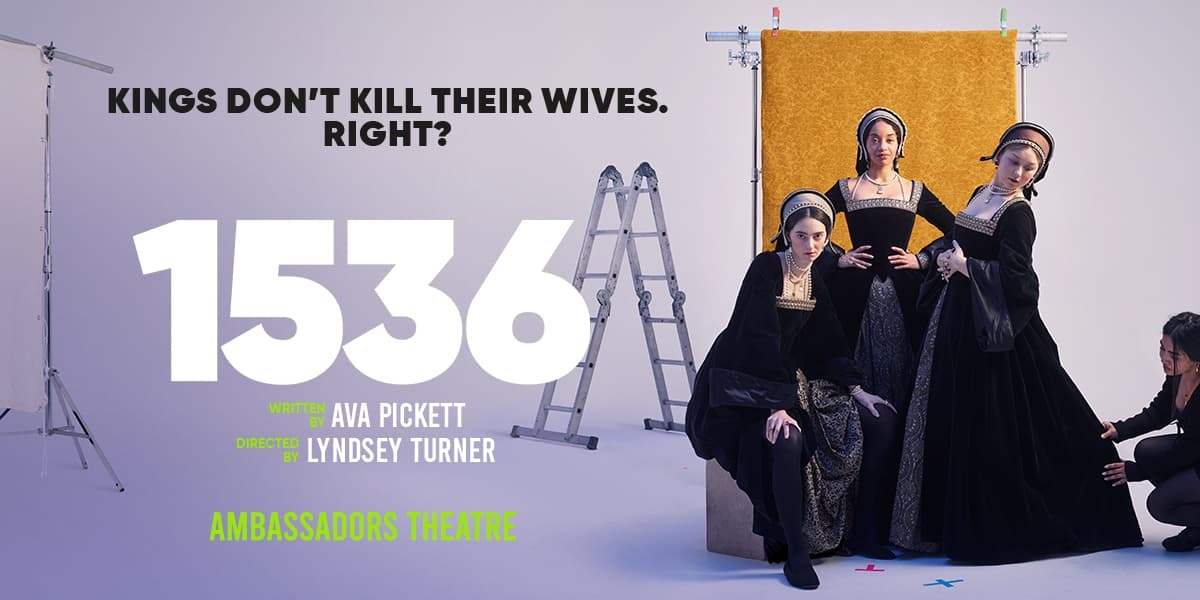
1536 Review: Funny, Furious and Frighteningly Relevant. A Brilliantly Sharp Study of Male Entitlement.
Published on 13 May 2026
Summary
- Review of 1536: a funny and frighteningly relevant take on male entitlement through the fallout of Anne Boleyn’s arrest.
- The story reframes a Tudor scandal through three Essex women, showing how royal power seeps into ordinary lives and local gossip.
- Brutal yet hilarious, it exposes how little has changed in 500 years in how women are judged, desired and controlled.
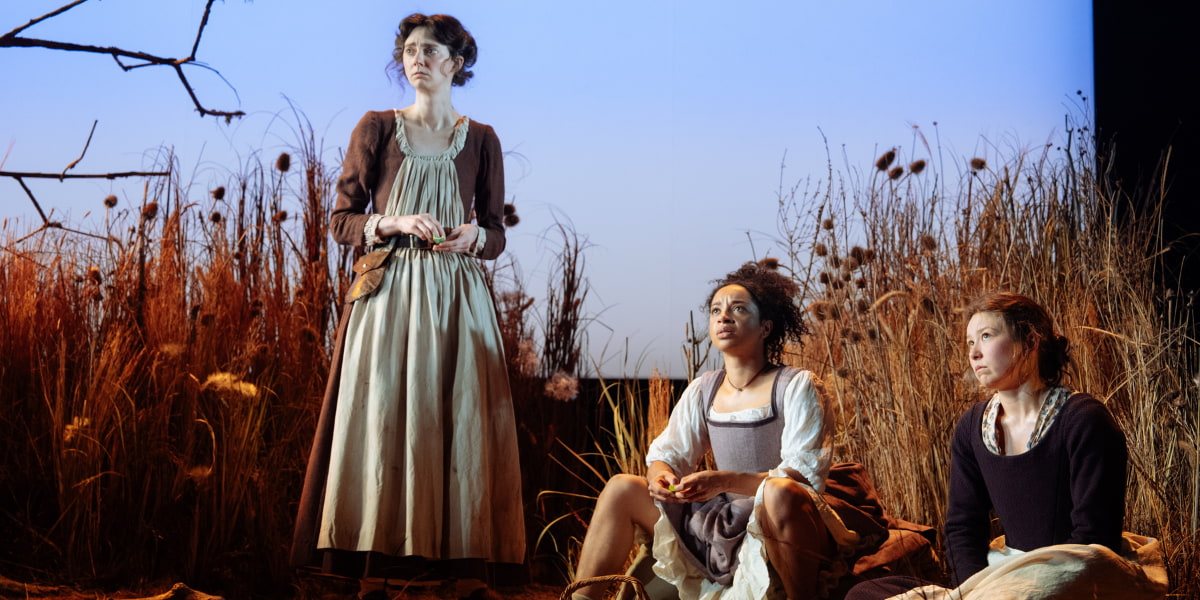
1536 takes a well-known headline - King Henry VIII Has Arrested Anne Boleyn for Treason - and shifts the lens to the people history usually treats as background noise; three women in rural Essex; Anna, Jane (yes the parallels with the Tudor court are deliberate) and Mariella. The result sees the ripple effect of a public scandal and the domestic fallout that follows, fuelled of course by the local rumour economy.
The king himself never appears, but his influence is everywhere. The women are divided by the news, partially treating it as hard-to-believe celeb gossip but also a cautionary tale of how women should behave. What makes the play so clever is that it understands misogyny not as one grand violent act, but more of an atmosphere or a social contamination spreading outward from the court of Henry VIII into the farmland in Essex. That tension sits at the heart of the play: history happening over there, while ordinary women live with the consequences over here, and how they walk the tricky tightrope of men being so quick to pigeonhole them as either pious AF or dangerously sexually alluring. It’s the classic Madonna-Whore Dichotomy.
Siena Kelly’s Anna is the most fascinating embodiment of that contradiction. At first, she treats desire like a form of currency. Men want her; therefore she has power. Scene after scene begins with her and Richard (Jane’s fiance) up against a tree S-H-A-G-G-I-N-G until their passion becomes something else…
And this is when the play becomes completely devastating. Men adore Anna when she’s exciting, unattainable, dangerous; the ultimate male fantasy. But the second male ego enters the equation - once respectability, ownership or humiliation become involved - the language changes. Suddenly she’s “unwomanly”. A whore. Their relationship, mirroring that of Henry VIII and Anne Boleyn, becomes a power play or a very dangerous game of chess. Meanwhile Jane (played brilliantly by Liv Hill) tries the opposite route: goodness, obedience, softness, prayer. Be the woman men publicly approve of rather than privately desire. It doesn’t save her either.
Pickett’s writing constantly circles the same brutal question: what exactly do men want from women? Beauty? Purity? Submission? Excitement? Loyalty? Silence? The answer, depressingly, seems to be all of it at once.
What stops all this from becoming unbearably heavy is how funny the play is. Not polite little theatre chuckles either — properly biting, gossipy, occasionally filthy comedy. There’s something amazingly chaotic about watching the Tudor women argue, flirt, swear and spiral in moments that feel more akin to a night out in Essex than a dusty history lesson. At times, it feels like The Only Way Is Essex wandered into Wolf Hall after three or four Aperols.
And that balance is exactly why the play works. Beneath the melodrama, the betrayals and the gasp-inducing reveals, there’s a very modern story about women trying to understand what version of themselves the world will allow them to be. And it’s scary to see how little has actually changed in the last 500 years. Henry VIII, Hugh Hefner, P Diddy, Andrew Tate, Halitosis Harry who called you a ‘frigid slag’ when you didn’t want to get with him during Spin The Bottle at the Year 9 disco, all following the Male Entitlement Handbook: idealise the woman, crave validation, feel entitled to possess her, reward women who fit the fantasy, get rejected, reframe her as the villain, punish or destroy her. Rinse and repeat until the end of time.
Weak men lashing out. Followed by women holding each other up one minute and tearing strips off each other the next. It’s unnerving how Ava Pickett’s brilliantly sharp drama feels like it could have been written yesterday. For all its Tudor trappings, 1536 asks a very modern question: when powerful men poison the well, who gets left drinking from it?
Fans of Six will probably recognise some of that energy too: women reclaiming space in a historical narrative that traditionally sidelines them. But where Six turns female rage into a pop concert, 1536 leaves it festering in the marshes. It’s messier, sadder and way more frightening.
1536 plays at the Ambassador’s Theatre until 1 August 2026. Book your tickets today.
By Hay Brunsdon
I've over 15 years of writing and editorial experience, and starting working in the West End theatre industry in 2012. When not watching or writing about theatre I'm usually swimming, hiking, running, or training for triathlons in the Stroud valleys.