
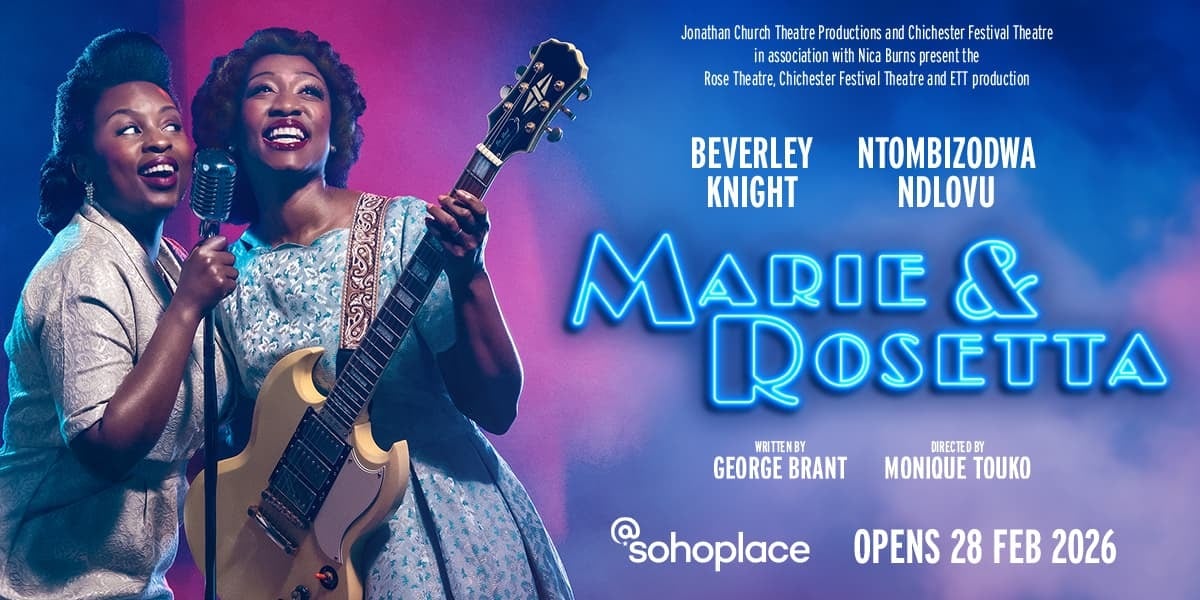
Marie & Rosetta Review: Note Perfect; My Goosebumps Had Goosebumps
Published on 7 March 2026
A joyful exploration of music as faith, rebellion and the evolution of sound across generations.
As someone who has been hyper-fixated on gospel music since obsessively asking to rent the Sister Act 2: Back in the Habit VHS every weekend since I was six; tricking my husband into traipsing around the Mississippi Blues Trail (on the promise of ‘really good barbecue’) and making a 200-mile detour / musical pilgrimage just to visit Al Green’s Tabernacle Church in Memphis last summer, it’s safe to say I went into @sohoplace with sky-high expectations. It’s also safe to say that I wasn’t disappointed.
Set in Mississippi in the 1940s, George Brant's play unfolds over one night of rehearsal as Sister Rosetta Tharpe (played brilliantly by Soul Queen Beverley Knight) prepares for her first tour with young gospel singer Marie Knight (brought to life by the insanely talented Ntombizodwa Ndlovu). As a singer-guitarist equally fluent in gospel, blues and jazz, Tharpe embodied a distinctly American artistic tension between the sacred and the secular. She fully saw gospel and blues as two sides of the same musical coin and felt perfectly at home fusing them together both in Sunday service and in Saturday night juke joints - salvation met with the swagger of an electric guitar to create a sound which, for Tharpe, did not need to be confined within church walls despite what many conservative voices in the congregation had to say about it at the time.
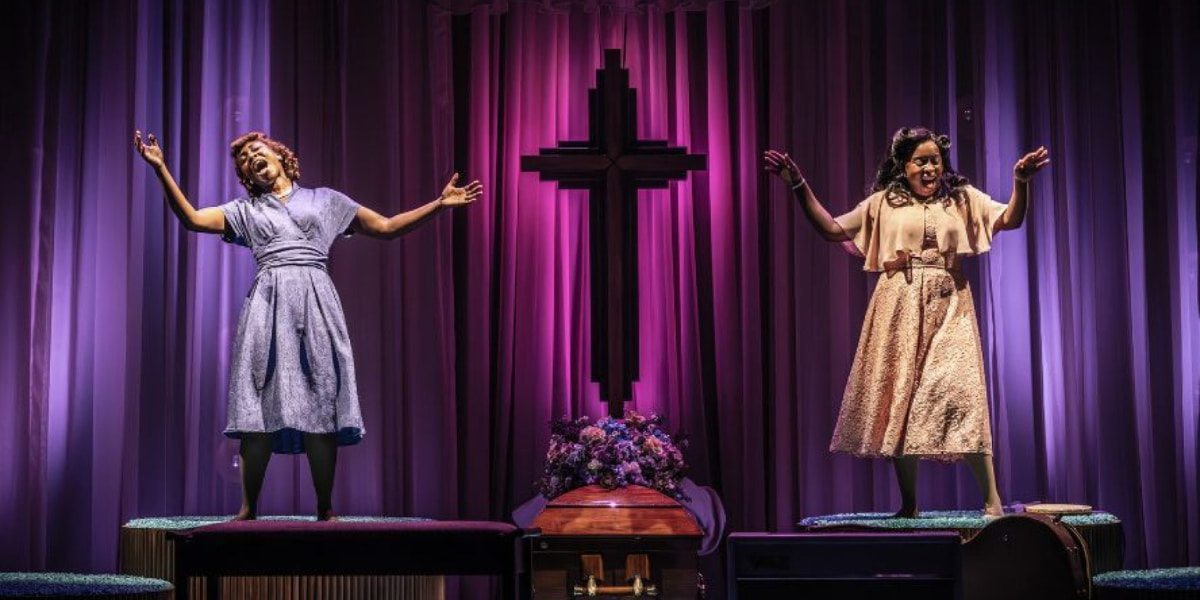
Meanwhile, the timid yet starstuck Marie Knight is simultaneously agog at Rosetta’s artistry and painfully aware of social and moral expectations — caught between awe, modesty, fascination and conservative restraint of her church upbringing as they tour the segregated Deep South. Rosetta encourages her to add more movement, more soul and more swing to her singing, guiding Marie from secretly playing Tharpe’s music in a church basement toward a fuller, more liberated expression of the passion and sensuality that can live inside gospel without diminishing its spiritual power.
The show’s greatest strength lies in the dynamic between the two women that recalls the emotional warmth and complexity of relationships such as that between Shug Avery and Celie in The Color Purple; where intimacy is conveyed less through explicit romance and more through tenderness, female empowerment and shared liberation. While the production centres on musical partnership, it also suggests a deeper emotional connection shaped by mentorship, and the question of whether a divine gift of talent belongs to God, the congregation or the wider world.
The production brilliantly captures a moment when gospel music was negotiating its own identity — rooted in church tradition yet increasingly drawn toward jazz, and ultimately helping give rise to rock ’n’ roll. Long before rock ’n’ roll had a name, Sister Rosetta Tharpe was helping forge its sound, later amplified by artists such as Elvis Presley, Little Richard and Johnny Cash. It’s safe to say that Tharpe walked so these artists could run!
Seeing the story of this musical evolution in the intimately in-the-round setting of @sohoplace and being within feet of the full-throated powerhouses Beverley Knight and Ntombizodwa Ndlovu felt like a very rare treat. It’s roof raising, fiercely anointed, and, besides the fact that I could genuinely sit and listen to Beverley Knight sing the Yellow Pages with those soulful, velvety vocals, this is easily one of the most uplifting night out in London right now. It’s also a hell of a lot cheaper than an American road trip (and every bit as transporting).
Marie & Rosetta plays at @sohoplace until 11 April 2026. Book your tickets today.
By Hay Brunsdon
I've over 15 years of writing and editorial experience, and starting working in the West End theatre industry in 2012. When not watching or writing about theatre I'm usually swimming, hiking, running, or training for triathlons in the Stroud valleys.