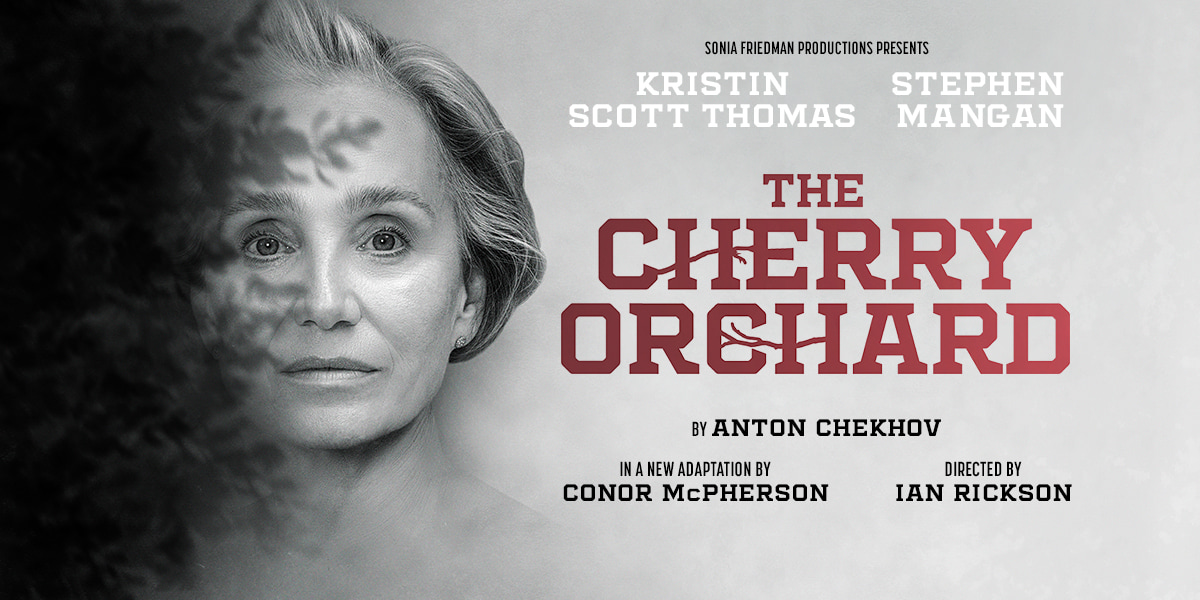
Kristin Scott Thomas and Stephen Mangan harvest laughs from Chekhov’s final play
Published on 14 October 2026
Chekhov is fruitful ground for Director Ian Rickson and playwright Conor McPherson. Following their 5-star production of Uncle Vanya, the pair have reunited once more for The Cherry Orchard. And it’s blooming marvelous.
First performed in 1904, Anton Chekhov’s final play follows aristocratic landowner Madame Ranevskaya (Kristin Scott Thomas) as she returns to her family estate, only to find its debts mounting and its beloved cherry orchard facing sale. Besotted businessman Lopakhin (Stephen Mangan), the son of peasants who once served the family, offers a practical solution. However sentiment, pride and an impressive capacity for self-deception prove hard to overcome, and soon it isn’t just the family's finances that are falling.
Chekhov famously described the play as a comedy, though productions have often leaned towards its melancholy. McPherson's new adaptation embraces Chekhov’s vision. Some of the biggest laughs come from Uncle Gaev (Peter Wight), who climbs onto a stool to deliver what he considers profound speeches, though his grand declarations have about as much substance as the family’s paltry pantry cupboard. Karl Johnson’s Firs, meanwhile, makes Father Time look positively youthful. Eccentric and gloriously foul-mouthed, the elderly servant delivers some of the production’s best lines with impeccable comic timing.
Kristin Scott Thomas is compelling as Ranevskaya, capturing the vulnerability beneath her character’s charm. It marks another Chekhov collaboration with director Ian Rickson, following their work together on The Seagull, for which Scott Thomas won an Olivier Award. Here, she brings a poignant humanity to a woman struggling to accept that the life she treasures is slipping away. Surely another award-winning performance?
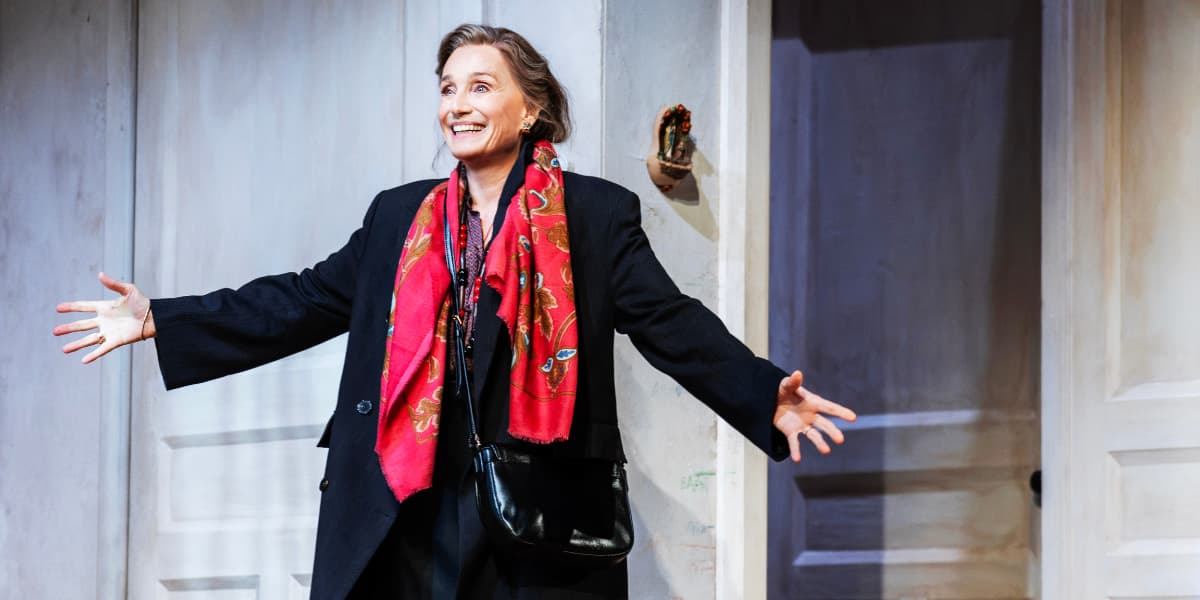
Mangan’s Lopakhin is an energetic counterpoint, a self-made businessman whose practical instincts are repeatedly undermined by his own emotional hesitations. Their performances give the play a lively tension between sentiment and self-interest.
The laughter is plentiful, making the moments of cruelty all the more striking. When a begging peasant enters the house, the contempt with which she is treated is particularly revealing. Lopakhin, who proudly identifies himself as a peasant despite his new-found wealth, is among the most dismissive. The contradiction exposes the play’s enduring interest in class: escaping one’s origins is not necessarily the same as escaping the prejudices they have instilled.
Elsewhere, Vinette Robinson’s long-suffering Varya makes a quietly affecting study of thwarted hope. Her expectation that Lopakhin will finally propose hangs over their exchanges, his apparent readiness never quite becoming action. As the family’s fortunes dwindle, her disappointment becomes increasingly difficult to conceal.
Ruby Bentall’s Sharlotta supplies a little magic of her own, with card tricks and ventriloquism that add to the production’s offbeat charm. The merriment of Act 2, enhanced by a band of travelling musicians, is never entirely comfortable; beneath it lies the nagging sense that the party cannot last.
This is a lively, bittersweet Chekhov in which the laughs flourish even as the family’s fortunes wither. Balancing uproarious comedy and melancholy, this production is the cream of the crop.** **
The Cherry Orchard plays at the Harold Pinter Theatre until 9 January 2027.