
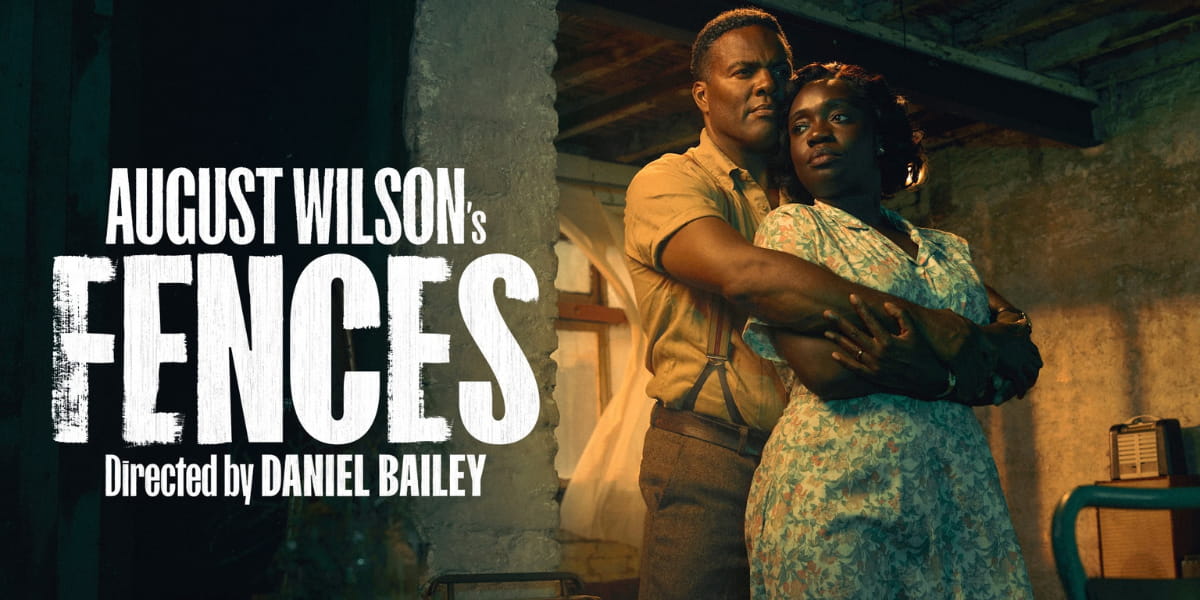
August Wilson’s Fences Review: A Powerful Portrait of Family, Prejudice and Masculinity
Published on 12 October 2026
Written in 1985, August Wilson’s Fences is part of his American Century Cycle, a landmark series of ten plays exploring Black American life across each decade of the 20th century. Set in 1950s Pittsburgh, it follows Troy Maxson, a garbage collector whose promising baseball career was cut short by racial discrimination. Having spent 15 years in prison before building a life for himself, Troy takes immense pride in providing for his family, but his own disappointments begin to shape the future he imagines for his wife, Rose, and teenage son, Cory. When Cory attracts the attention of a college football recruiter, the prospect of a future his father could never achieve brings their conflicting ideas about ambition, race and responsibility to the surface.
Despite its three hour running time, Fences never feels unnecessarily long. Every scene feels purposeful, as August Wilson gradually peels back the layers of an apparently ordinary family, revealing the resentments, disappointments and long-held wounds beneath the surface. There is something almost soap-opera-like about it: you feel as though you are peering into real people’s lives, where domestic routines are charged with tension, and seemingly minor disagreements expose much deeper under currents.
There are shades of Arthur Miller in its portrait of a working man wrestling with his place in the world, his disappointments and the legacy he will leave behind. Yet Wilson’s achievement is entirely his own, rooted in the Black experience of 1950s America and the racism that shapes every aspect of his characters’ lives. His writing is funny, lyrical and brutally perceptive, exposing not only the discrimination faced by Black men but also the inequalities experienced by Black women within their own families.
Ray Fearon is extraordinary as Troy. His performance is a gut punch, capturing the contradictions of a man who is at once charismatic and cruel, wounded and controlling. Fearon makes us understand how Troy’s experiences of racism and disappointment have shaped his worldview, without ever losing sight of the damage he inflicts on those around him.
Troy has spent his life fighting against a world that has limited his opportunities, and he is determined that his family should understand the harsh realities he has learned to navigate. But his desire to protect them is inseparable from his pride, bitterness and need to dictate their futures. His resistance to Cory’s ambitions is not simply a wish to see his son fail; it is the product of a man who cannot imagine a different outcome from the one life has taught him to expect.
Wilson constantly shifts the balance between our sympathy for Troy and our frustration with him. We understand the world that has shaped his bitterness, but we also see how he reproduces its inequalities within his own home, demanding obedience from his wife and son while exempting himself from the very responsibilities he expects them to honour.
Wilson is equally incisive about Troy’s treatment of Rose, played beautifully by Madeline Appiah. He demands loyalty and obedience from his wife while giving himself permission to escape the responsibilities he imposes on everyone else. His infidelity exposes the double standards underpinning his authority, as well as the fragile ego beneath it. When the affair is revealed, the audible gasp from the audience says everything. Appiah brings real weight to Rose, making the cost of Troy’s choices devastatingly clear.
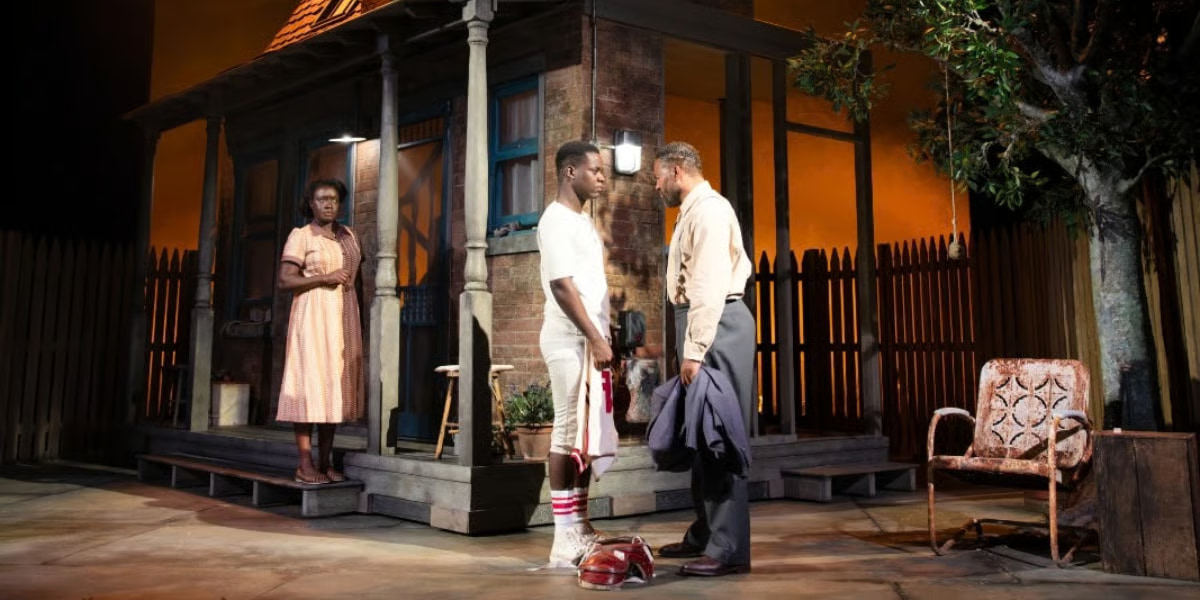
The play’s title grows increasingly potent as the story unfolds too. Troy is physically building a fence around his home, but the fences in this production are emotional and societal, too. He wants to keep the world out and his family in, while the racism he has experienced has already established boundaries around what he believes is possible. The tragedy is that, in trying to protect his family from those barriers, he begins erecting his own.
Troy’s brother Gabriel brings another dimension to Wilson’s exploration of race and masculinity. A Black veteran left with a serious brain injury after serving his country, Gabriel receives just $3,000 in compensation (for context, Black veterans are estimated to have received only around 40% of the GI Bill benefits available to white veterans). The money helps Troy secure the family home, which becomes a powerful symbol of his independence. Yet there is an uncomfortable contradiction at the heart of that achievement: Troy takes enormous pride in providing for his family, but part of his security rests on the compensation paid for his brother’s life-changing injury.
Fences is gritty, lyrical and devastating. Wilson finds the epic in the everyday, revealing how racism, pride and inherited pain can shape a family across generations. Anchored by a remarkable and explosive performance from Fearon and a beautifully layered ensemble, this is THE show to watch in October. Playing until the end of month at the Lyric Hammersmith Theatre, book your Fences tickets today.

By Hay Brunsdon
I've over 15 years of writing and editorial experience, and starting working in the West End theatre industry in 2012. When not watching or writing about theatre I'm usually swimming, hiking, running, or training for triathlons in the Stroud valleys.