
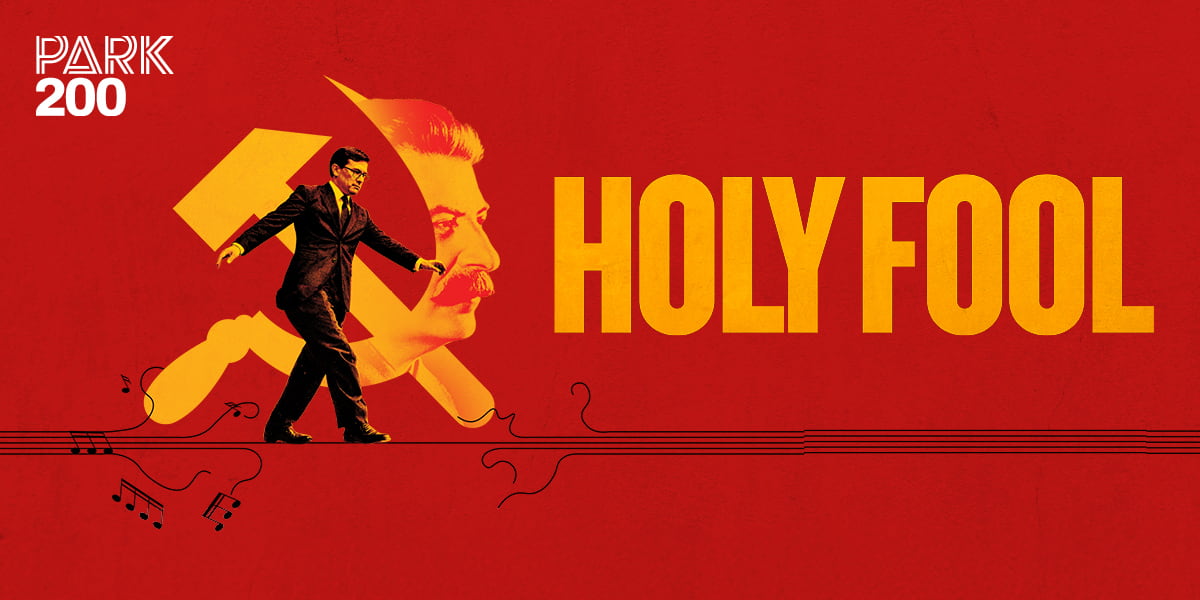
Kate Fahy on Directing Holy Fool: “It Feels Like Such a Necessary Story”
Published on 12 August 2026
In 1936, in the year in which he began the great purge which sent 600,000 people in the USSR to their deaths, including many artists and intellectuals, Stalin went to the opera. The production was Lady Macbeth of the Mtsensk District, written by the composer Dmitri Shostakovich, who had found international fame after his first symphony premiered in 1926 when he was just 20. Stalin hated what he saw and left before the end. Some accounts of the evening say that when Shostakovich joined the cast on stage for the curtain call, he was trembling.
Shortly after an editorial appeared in Pravda denouncing the opera for being formalist, bourgeois and anti-Soviet. The opera quickly disappeared from the schedules. Shostakovich never wrote another new opera.
Later this month Holy Fool, a new play by Rosalind Adler and Lea Sellars, opens at the Park Theatre, directed by Kate Fahy. Fahy is best known as an actor (she was in the premiere of The Goat in the West End opposite her husband Jonathan Pryce and most recently was widely praised for her turn as Aunt Belle in the National Theatre revival of Dear Octopus), but she jumped at the chance to direct Holy Fool. It is a play which explores the tightrope walked by Shostakovich for the rest of his life as he found himself caught between his masters and his muse.
“I had no hesitation. It feels like such a necessary story at the moment,” says Fahy, suggesting that art and dissidence often go hand in hand. She points to the open letter written by the Maly Theatre’s director, Lev Dodin, an artist who has spent his career navigating Russian censorship and who, in 2022, shortly after Russia’s invasion of Ukraine, called for the immediate end to hostilities. A bold, brave and, some say, reckless move given Putin’s attitudes to dissent in any form.
What is the artist to do in the face of repression and suppression?
“It’s very easy for me to say, sitting in London, that artists must always tell truth to power,” says Fahy, “but it is a difficult path for an artist to choose. Putting on a play in London about Stalinist repression is not going to be censored or cause anyone to be tortured, but it might elsewhere.”
Indeed. Belarus Free Theatre has had to flee its home country after threats, arrests and murders by the regime. Even a democracy such as the USA has seen under Trump what can happen to a venue such as the Kennedy Center if it does not stick to a programme of work approved by the president. But for Shostakovich the threats were far graver and immediate. Fahy says that he only narrowly avoided being tortured because the man who was supposed to do the job was himself arrested.
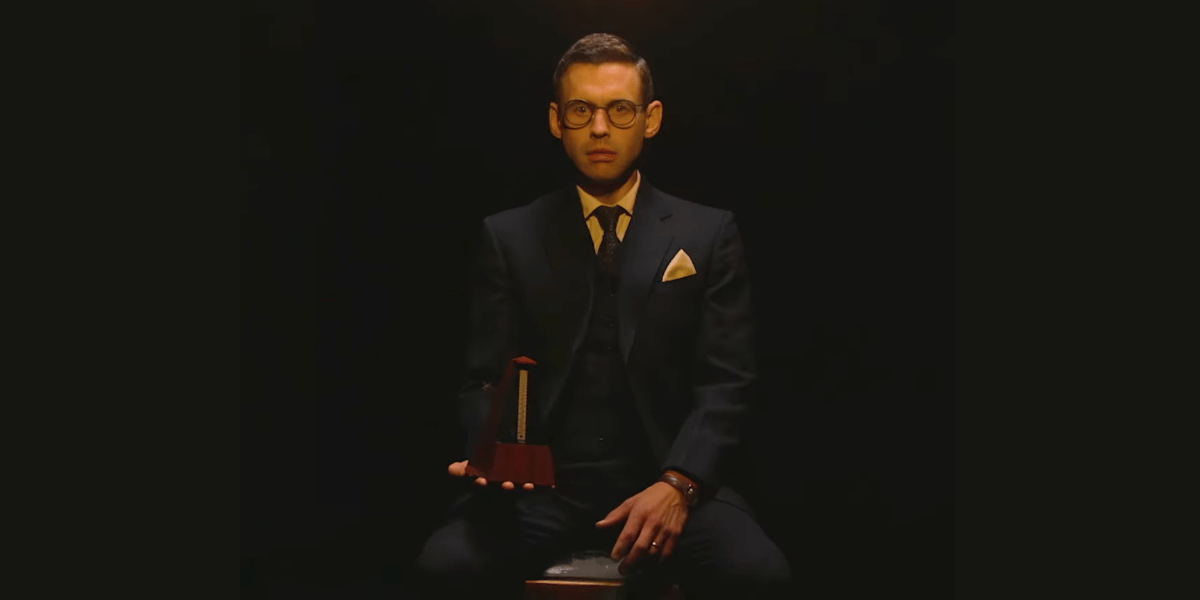
We’d all like to think that if we lived under an oppressive regime we would speak our minds, but how many of us would if it meant we might be executed or see our family threatened? What would we do in that situation? Refuse to compromise and risk punishment, even death, or perhaps play the holy fool? In Russian Orthodox culture the 'holy fool' refers to a person who makes themselves look foolish or mad but is really sane. Think perhaps of the Fool in King Lear, who has licence to say things to the king that other people wouldn’t dare because they do it under the guise of tomfoolery.
Was Shostakovich a holy fool, appearing to appease the regime but in reality writing in musical code to signal his opposition? Scholars are divided, with some claiming his symphonies, particularly the Fifth, are signs of an artist using his art to demonstrate his resistance. Fahy argues we can’t be sure but adds that when she first consulted a musicologist friend about the production, 'He said to me, "You know, you need to remember that they flattered him into being the national musician of the USSR, and he bought that for sure. He was constantly compromised.’ But when I sent him the play, after he read it, he said, ‘It’s all here. The complexity of the man and the artist.’ It’s a really clever piece of writing.”
Fahy argues that the struggle to avoid arrest and desire to continue to be able to compose also created marital tensions between the composer and his wife, the physicist Nina Varzar.
“At the heart of the play is his relationship with his wife Nina, who was very smart. She was the one who was constantly calling him to account, in fact, so much so that you do sometimes think perhaps she wanted him to die? Of course, she doesn't. But she really struggles with the compromises which he agrees to.”
Fahy thinks we need to be understanding about the position in which he found himself.
“He was given an opportunity to stay alive, and he took it. He wanted to get through the fire and continue to be a working musician.” Who knows, when under pressure, whether we all might make the same choice too?
Holy Fool plays at the Park Theatre from 27 Aug to 10 Oct 2026. Book your tickets today.
By Lyn Gardner
Lyn Gardner is an acclaimed theatre journalist and former critic with decades of experience covering British theatre, from off-West End and fringe theatre to major West End productions.