
Lyn Gardner Speaks to Martina Laird as Driftwood Transfers to the Kiln Theatre
Published on 27 May 2026
Last updated on 29 May 2026
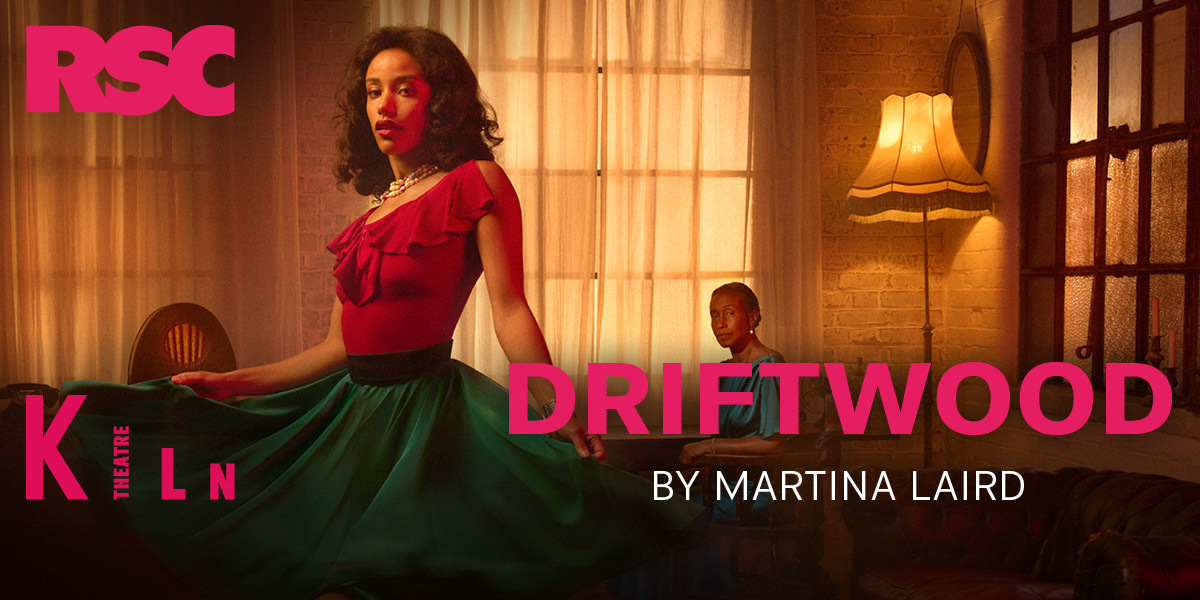
Martina Laird first began writing Driftwood, which arrives at the Kiln Theatre early next month, 20 years ago. A successful actor—for six years she played the much loved character Comfort Jones in Casualty and has worked at major theatres from the Donmar to Shakespeare’s Globe—Laird found herself haunted by the characters and story of Driftwood which is set in a gentleman’s club in Trinidad in 1956 when the island was on the brink of great change. Trinidad—where Laird was raised-- and Tobago became independent in 1962.
“I wrote it because the characters and setting were in my head, and they just kept talking to me, and I wanted to figure out what I was trying to say or what it was saying to me.” She says that it is set in 1956 because “it was a time when so many questions were in the air about what came next and so many artists were part of that debate about what the future should look like. It was a time of hope and optimism and self-definition.”
She did send the play out to a few theatres but was told by them, “We only do topical British subjects," as if the legacies of colonialism have absolutely nothing to do with contemporary British life. Perhaps they were disconcerted too by the way it puts the island’s vernacular to potent dramatic use. But that was two decades ago, and attitudes change not just to what stories are told but how they are told.
But rebuffed and for want of the dramaturgical help she felt she and the play needed, Laird abandoned it in a bottom drawer. She only got it out again just before the pandemic, organising a reading in her own home with Caribbean food and rum, and realised how much the play still talked to her but, more importantly, talked to other people.
It was still a slow burn to get it staged. She sought some dramaturgical support from Sebastian Born, and in 2024 he suggested she submit the play to the Verity Bargate Award run by Soho Theatre. It’s a reminder how plays overlooked by theatres often get an opportunity to rise via competition when they are read by several readers. Driftwood didn’t win, but it was the runner-up out of 1,700 entries. At the award ceremony someone from the RSC’s literary department asked Laird to send the play to them. Earlier this year the play opened at the RSC’s Other Place Theatre in Stratford upon Avon and now gets a London run.

The gentleman’s club—British owned but reliant on local labour, most particularly that of Pearl and her daughter, Ruby—offers a microcosm of Trinidad under British rule. The heat starts to rise with the arrival of Ruby’s brother, Diamond, a man who likes to cut a deal. The play was originally called All Fours, after the popular Trinidadian card game played in pairs. “The dynamics of the characters in the play reflect the game,” says Laird. "When you play, you never know whether someone is sending a signal, what the plan is, and who you should be in cahoots with.”
Sometimes a play finds its moment and lands at just the right time. Driftwood is one of those plays. Not least because some of the decisions taken 70 years ago reverberate. At the start of this year, the invasion of Venezuela by Trump and the imprisoning of Venezuelan president Nicolas Maduro on US soil were facilitated by the cooperation of Trinidad and Tobago, which allowed US military and weapons systems on its soil. “The prime minister said it was to stop drug smugglers, but it was clearly a political decision.”
"Sometimes", says Laird, "you have to look back to understand where you are now." If you live under one system for hundreds of years, the impact doesn’t just stop when you become independent. The idea that 1956 is just history, something that happened in the past, is not true. The systems that were in place continue to impact psychologically because they are culturally embedded and often confused with tradition. So, what happened then continues to play out today, and it affects people’s sense of self."
Laird says that she thought it might feel odd to watch her play being produced but not have a role in it herself, but she says watching the actors grapple with its demands has been a thrill and a learning curve. “I love being an actor, but I have loved watching the actors discovering a play, and this lot have been wonderful.”
But she also admits that after so many years in which her concentration has been first and foremost on acting, it has been “a scary process to step out of that familiar role,” and name herself as a writer too. But after tasting success, she’s not going to let another 20 years go by before her next play. She’ll always be an actor, but I bet we’ll be hearing more from Martina Laird, playwright.
Driftwood plays at the Kiln Theatre from 3 June - 4 July 2026. Book your tickets today.
By Lyn Gardner
Lyn Gardner is an acclaimed theatre journalist and former critic with decades of experience covering British theatre, from off-West End and fringe theatre to major West End productions.