
Lyn Gardner on Off West End venues - don't skip the trip
Published on 10 September 2026
London’s West End theatres are undoubtedly a marvel, but London boasts many other theatres too—often known as Off West End—who shine no less brightly than Shaftesbury Avenue and play a significant role in making London the theatre capital of the world. One of the great pleasures of Off West End theatres is their hospitality and informality: you can often get food in the theatre before the show, and you may even find yourself rubbing shoulders with the cast in the bar after the show. That won’t happen in the West End, where audiences are hurried out as soon as the performance ends.
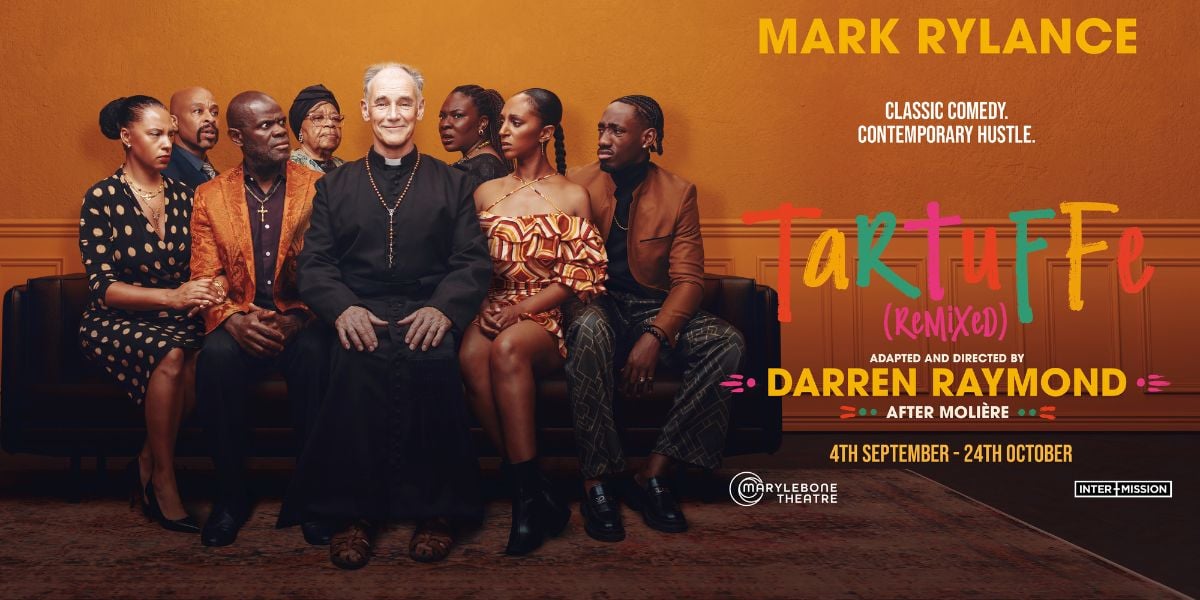
You can find stars off-West End too, whether it is Mark Rylance appearing in Tartuffe (Remixed) at the 200-seater Marylebone Theatre, Maria Friedman leading the cast in the musical Kimberly Akimbo at the Hampstead Theatre or Downtown star Michelle Dockery, starring in Bloodsport: After Helen of Troy, written by 1536 writer Ava Pickett, at the Theatre Royal Stratford East, the East End theatre made famous by the late, great Joan Littlewood.
Some of these off-West End theatres are tiny—like the long-established Finborough theatre in Earl’s Court, where Nicola McAuliffe is currently starring in Annie Wobbler (Revisited). Others have specialisms such as new writing and that includes the Royal Court in Sloane Square, whose production of Giant transferred to the West End and Broadway, and where Tilda Swinton currently stars in Man to Man. Plenty serve their local neighbourhood but also attract in-the-know theatre-goers from all across London.
Take the Lyric Hammersmith in West London, which is currently staging Lucy Kirkwood’s tense post-nuclear-disaster thriller, The Children, in a production starring Meera Syal and which next month revives August Wilson’s Fences, a meaty drama about how thwarted dreams can haunt the next generation, with Ray Fearon as Troy, the would-be basketball star whose hopes were dashed by racism; who is still trying to live his dreams through his sons. Daniel Bailey—whose production of Red Pitch, which transferred from the Bush to the West End—directs.
The Kiln in Kilburn is another example of an Off-West End whose influence extends far beyond North-West London. Its last artistic director, Indhu Rubasingham, went from Kilburn to the South Bank after securing what is generally seen as the UK’s top theatre job: artistic director of the National Theatre.
Her successor, Amit Sharma, is doing a terrific job with the autumn season, including the Off Broadway hit, Table 17, a rom-com about two former lovers meeting up again for the first time, and a revival of Nine Night, Natasha Gordon’s National Theatre and West End comedy hit, which takes its name from the Afro-Caribbean custom of nine days of mourning for the dead.
They are also a breeding ground for talent. The King’s Head in Islington, founded in 1970 as one of London’s first pub theatres but now in new premises, played a significant role in the careers of many, including Alan Rickman, Richard E. Grant (starring in Hay Fever in the West End), Tom Stoppard and Victoria Wood. Paul Bradshaw’s Tell Me Straight and Aggy May open there in mid-October.
Some Off West End theatres are purpose-built, such as the Rose in Kingston, where Al Smith’s stage version of Jerome K. Jerome’s Three Men in a Boat sets sail this month, and October sees a new version of Jane Eyre directed by Lily Dyble, winner of the 2024 Peter Hall Director Award. But many Off West End theatres are in found spaces. The Bush in West London is situated in an old library, the Menier, whose production of The Producers transferred to the West End where it can be seen until the middle of this month, is in an old chocolate factory, and the Arcola in Dalston is a two-studio space in a former paint factory.
The Arcola has a terrific autumn season, kicking off this week with Morgan Lloyd Malcolm’s adaptation of Henry James’ ghost story, The Turn of the Screw, which will ten embark on a national tour. If you liked Paranormal Activity, give The Turn of the Screw a try. In the other studio space, John Webber’s hugely topical new play about climate activism and protest, Fire Fire, is premiered. In October that great veteran actor, Greg Hicks, plays Halvard Solness in Ibsen’s The Master Builder, directed by Mehmet Ergen, whose revival of Enemy of the People was much admired.
One of the most intriguing Off West End offerings of the autumn season, Ceilidh, comes to Shoreditch Town Hall in October via Baltimore and Pitlochry in the Scottish Highlands, proving that off West End can be truly international. Directed by Sam Pinkleton, who is the director of Oh, Mary! currently at Trafalgar Theatre, it takes the form of a musical written by Scottish duo Noisemaker, which uses the traditional Gaelic folk music gathering to tell a family story of generations shaped by dance and music. What makes it sound even more interesting is that the audience get to join in the dancing too. So, polish up those dancing shoes and prepare to join the party.
By Lyn Gardner
Lyn Gardner is an acclaimed theatre journalist and former critic with decades of experience covering British theatre, from off-West End and fringe theatre to major West End productions.